18 Movies
Lawrence Of Arabia. 1962, Starring
- Peter O'Toole as T. E. Lawrence. O'Toole's looks prompted a different reaction from Noël Coward, who quipped after seeing the première of the film, "If you had been any prettier, the film would have been called Florence of Arabia".[9]
- Alec Guinness as Prince Faisal
- Anthony Quinn as Auda Abu Tayi.
- Jack Hawkins as General Edmund Allenby.
- Omar Sharif as Sherif Ali ibn el Kharish.
- José Ferrer as the Turkish Bey.
- Anthony Quayle as Colonel Harry Brighton.
- Claude Rains as Mr Dryden.
- Arthur Kennedy as Jackson Bentley.
- Donald Wolfit as General Archibald Murray. He releases Lawrence to Mr Dryden.
- I. S. Johar as Gasim. Johar was a well-known Indian actor who occasionally appeared in international productions.
- Gamil Ratib as Majid. Ratib was a veteran Egyptian actor. His English was not considered good enough, so he was dubbed by an uncredited Robert Rietti[citation needed] in the final edit.
- Michel Ray as Farraj. At the time, Ray was a rising Anglo-Brazilian actor who had appeared in several films, including Irving Rapper's The Brave One (1956) and Anthony Mann's The Tin Star (1957).
- John Dimech as Daud
- Zia Mohyeddin as Tafas. Mohyeddin, one of Pakistan's best-known actors, played a character based on Lawrence's actual guide, Sheikh Obeid el-Rashid of the Hazimi branch of the Beni Salem, whom Lawrence referred to as Tafas several times in Seven Pillars.
- Howard Marion-Crawford as the medical officer. He was cast at the last minute during the filming of the Damascus scenes in Seville. The character was based on an officer mentioned in an incident in Seven Pillars of Wisdom. Lawrence's meeting the officer again while in British uniform was an invention of the script.
- Jack Gwillim as the club secretary. Gwillim was recommended to Lean for the film by close friend Quayle.
- Hugh Miller as the RAMC colonel. He worked on several of Lean's films as a dialogue coach and was one of several members of the film crew to be given bit parts (see below).
- Peter Burton as a Damascus sheik (uncredited)
- Kenneth Fortescue as Allenby's aide (uncredited)[16]
- Harry Fowler as Corporal William Potter (uncredited)[17]
- Jack Hedley as a reporter (uncredited)
- Ian MacNaughton as Corporal Michael George Hartley, Lawrence's companion in O'Toole's first scene (uncredited)
- Henry Oscar as Silliam, Faisal's servant (uncredited)
- Norman Rossington as Corporal Jenkins (uncredited)[16]
- John Ruddock as Elder Harith (uncredited)[16]
- Fernando Sancho as the Turkish sergeant (uncredited)
- Stuart Saunders as the regimental sergeant major (uncredited)
- Bryan Pringle as the driver of the car which takes Lawrence away at the end of the film (uncredited)
The crew consisted of over 200 people. Including cast and extras, over 1,000 people worked on the film.[18] Members of the crew portrayed minor characters. First assistant director Roy Stevens played the truck driver who transports Lawrence and Farraj to the Cairo HQ at the end of Act I; the sergeant who stops Lawrence and Farraj ("Where do you think you're going to, Mustapha?") is construction assistant Fred Bennett, and screenwriter Robert Bolt has a wordless cameo as one of the officers watching Allenby and Lawrence confer in the courtyard (he is smoking a pipe).[19] Steve Birtles, the film's gaffer, played the motorcyclist at the Suez Canal; Lean is rumoured to have provided the cyclist's voice shouting "Who are you?" Continuity supervisor Barbara Cole appeared as one of the nurses in the Damascus hospital scene. It may be the longest theatrical film with no female speaking roles. Women appear in crowd scenes or as extras.
Hollywood Suite, 1 January 2026, with Dr. Connie Luther. Soundtrack: "
Anachronisms:
When Lawrence arrives at the Suez Canal, the ship which comes into focus is a late-'50s Blue Funnel Line ship.
The airplanes used during the raid were DH Tiger Moths. They did not go into production until late 1929-early 1930.
In his interview of Faisal, Jackson Bentley mentions that "certain influential men" in America want their country to join World War I. However, this conversation occurs after the fall of Aqaba, which was in July 1917; by that time, the US had already been in the war for several months.
During the attack on Aqaba, a Turkish soldier is seen with a Browning M1919 machine gun. Which would not have been in use at the time of the Arabian revolt (1917) and it would not have been used by the Turks.
When Allenby and Lawrence visit the officers' bar in Cairo, immediately after Allenby says "Shall we go outside?", a bright yellow American school bus is briefly visible driving by the distant window in the right-middle portion of the frame.
In the attack on Aqaba, a white pickup truck can be seen in the background parked next to some white buildings.
Following Lawrence's memorial service, the view of the front of St Paul's Cathedral shows that the left-hand clock face (the North) is missing. This was actually destroyed during the Second World War, which did not begin until 4 years after T.E. Lawrence died.
Contrail over Damascus when Allenby in discussing the Arab Council on his balcony
When Lawrence reaches the Suez Canal, a steam freighter passing through blows its whistle. The whistle is an electric siren whistle. In 1917 most merchant ships were steam-powered. The ship's whistles would also have been steam-powered and would have given out a bellowing sound, not a piercing shriek as from an electric whistle as seen in the film. A steam whistle would have also emitted a great, highly-visible jet of steam upon being used.
At 1 hour 48m 56 seconds Auda Abu Tayi (Anthony Quinn) is smashing telegraphic equipment. In front of Auda Abu Tayi is a vacuum tube of approximately 1940 vintage and on the left hand side of the screen is a SupetHet radio receiver again of approximately 1940's vintage (with the tuning capacitor half open). Although vacuum tubes had previously been invented (1904) it is most unlikely that these would have been used in telegraphic equipment in Arabia in 1916. The Morse code heard when Auda Abu Tayi smashes the equipment is of an electronic nature again not available in 1916.
At the end of the film, the army truck passing Lawrence's car in the opposite direction (after the motorcycle passes by) is a modern cab-forward design not seen in that era.
In the opening scenes set in 1935, not only are three phase electricity cables visible in many shots, but a color UHF television transmitter is also visible over Lawrence's right shoulder.
Just after intermission, when Lawrence strikes a pose atop the train car for Jackson Bentley's camera, Bentley exclaims, "Yes sir, that's my baby!" But the Arabs attacked the Hejaz railway in 1917, and that phrase likely wouldn't be popular until 1925 when the Walter Donaldson/Gus Kahn song of the same name was composed and recorded.
Cocaine Bear (released as Crazy Bear in some countries). 2023, Starring
- Keri Russell as Sari
- Alden Ehrenreich as Eddie
- O'Shea Jackson Jr. as Daveed
- Ray Liotta as Syd
- Isiah Whitlock Jr. as Bob
- Brooklynn Prince as Dee Dee
- Christian Convery as Henry
- Margo Martindale as Ranger Liz
- Jesse Tyler Ferguson as Peter
- Kristofer Hivju as Olaf (Kristoffer)
- Hannah Hoekstra as Elsa
- Ayoola Smart as Officer Reba
- Aaron Holliday as Kid (Stache)
- J.B. Moore as Vest
- Leo Hanna as Ponytail
- Kahyun Kim as Beth
- Scott Seiss as Tom
- Matthew Rhys as Andrew Thornton, New York and Paris as Rosette (the doggy).
Allan Henry, a stunt performer and actor, played the role of the bear and is credited as "Bear Performer". He used custom-made, meter-long aluminum limb extensions to portray the bear's movements. While playing the bear, Henry did not have tracking markers on his face for animators to turn into digital muscle movements but provided a crucial reference point for the animators to create the bear's physicality and emotional state.
Crave, 2 January 2026. Soundtrack: "
Anachronisms:
When Sari dumps out Dee Dee's backpack, one of the items inside is a Rubik's Cube. The tiles are made of plastic. The film is set in 1985, at which time the colors were made from adhesive paper. Plastic tiles did not start until 2014.
The movie is supposed to take place circa 1985, but the ambulance that shows up to the ranger station is a 1994 Ford Econoline.
While the Rocky (1976) films existed in 1985, the toy title that Henry wears did not exist for sale at that time. It was released in 2006 to coincide with the sixth film Rocky Balboa (2006). It has since become a rare collectible. It's based on the Heavyweight Title from Ring Magazine.
When the bear is attacking Eddie in the woods, Stache tells Eddie to "just tap out." While there is evidence of the "tap out" as a means of surrendering a fight in martial arts dating back to the 19th century, the term did not become common in popular culture until the rise of mixed martial arts in the late 1990s, nearly 15 years after when this film is set. However, just because a phrase wasn't in common use it doesn't mean that Stache wouldn't know and use it. They were clearly an early adopter of the phrase.
Reba's dreadlocks would likely not have been a permitted hairstyle by a police force in 1985.
Caught Stealing. 2025, Starring
- Austin Butler as Henry "Hank" Thompson
- Matt Smith as Russ Miner
- Regina King as Det. Elise Roman
- Zoë Kravitz as Yvonne
- Liev Schreiber as Lipa Drucker
- Vincent D'Onofrio as Shmully Drucker
- Benito Martínez Ocasio as Colorado
- Griffin Dunne as Paul
- Carol Kane as Bubbe
- Action Bronson as Amtrak
- George Abud as Duane
- Nikita Kukushkin as Pavel
- Yuri Kolokolnikov as Aleksei
- D'Pharaoh Woon-A-Tai as Dale
- Will Brill as Jason
- Tenoch Huerta as a Tulum bartender
- Tonic as Bud the cat
- Laura Dern as Hank's mother
Crave, 5 January 2026. Soundtrack: "
Trivia:
The scrolling credits change direction (bottom to top, side to side, sideways) in sync with the credits song.
The NL Wild Card tiebreaker game that Hank turns off at the end of the game was won by the Chicago Cubs, who defeated Hank's San Francisco Giants and advanced to the playoffs.
Anachronisms:
Matt Smith's character calls the English top league the Premier League, despite it being set in 1998, when the league was called the Premiership until 2007.
In Hank's room, above the bed, you can see a "stolen" NYC subway sign featuring the "W" line. The "W" label for this alternate "N" line was first used in 2001, 3 years after the time the film is set
The film takes place in 1998, but during one scene Russ references "The Idles", a band that was not formed until 2009. The Idles worked on the movie soundtrack.
During the Taxi scene, you can hear a recent Arabic song is playing in the background, though the movie is set in 1998.
A 2001 Ford Ranger, a 2004 Hyundai Elantra, and a 2021 Toyota Sienna can be seen at various points in the movie. A 1999 Infiniti G20, which would have been brand new at the time the movie takes place, has an extremely worn clear-coa
The NYC subway sign above Hank's bed shows a yellow and black Q train logo, indicating it runs along the Broadway line in Manhattan. At the time the movie was set, the Q ran along 6th Avenue with the B, D, and F trains and, like them, was orange and white. The Q joined the N, R, and newly created W lines in 2001.
During the driving scene with Hank, Lipa and Shmully, when the brothers admit to have killed Yvonne, twenty-first century automobiles can be seen out on the streets between shots. The movie is set in 1998.
Gunslingers. 2025, Starring
- Nicolas Cage as Ben
- Stephen Dorff as Thomas Keller
- Heather Graham as Val
- Scarlet Rose Stallone as Bella
- Tzi Ma as Lin
- Jeremy Kent Jackson as Robert Keller
- Costas Mandylor as Jericho
- Cooper Barnes as Levi
- Bre Blair as Mary
- Randall Batinkoff as Doc
- William McNamara as Kelly
- Mohamed Karim as Hoodoo
- Forest Wilder as Kid
- Forrie J. Smith as Barker
- Laurie Love as Thalia
- Ava Monroe Tadross as Grace
- Eric Mabius as Edward
- Mitchell Hoog as Jesse Rockefeller
- Brooklen Wilkes as Hope
- Dan O'Brien as Josh
- Kartuah Chapman as Tim
Crave, 12 January 2026. Soundtrack: Composed by Richard Patrick. Trivia:
Stephen Dorff's most critically acclaimed role was in Somewhere (2010).
Anachronisms:
Incendiary revolver rounds didn't exist in 1905.
At around 3:20 when going to fill the canteen in the creek, you hear what sounds like metal clinking - but it clearly shows the top of the leather-wrapped canteen to be white plastic.
Barmaid goes in the back for more ammo, brings out several cases, says: "Six boxes of .357. And...". The .357 cartridge was developed by Elmer Keith in the mid 1930s.
A House Of Dynamite. 2025, Starring
- Idris Elba as the President of the United States
- Rebecca Ferguson as Captain Olivia Walker, the duty officer in charge of the White House Situation Room during the crisis
- Gabriel Basso as Deputy National Security Advisor Jake Baerington
- Jared Harris as Secretary of Defense Reid Baker
- Tracy Letts as General Anthony Brady, Combatant Commander of United States Strategic Command (STRATCOM)
- Anthony Ramos as Major Daniel Gonzalez, commander of Fort Greely, Alaska
- Moses Ingram as Cathy Rogers, a FEMA official with the Office of National Continuity Programs
- Jonah Hauer-King as Lieutenant Commander Robert Reeves, the Presidential Military Aide
- Greta Lee as Ana Park, the National Intelligence Officer for North Korea
- Jason Clarke as Admiral Mark Miller, Director of the White House Situation Room
- Malachi Beasley as SCPO William Davis, Walker's colleague in the Situation Room
- Brian Tee as SAIC Ken Cho, the head of the United States Secret Service Presidential Protection Detail
- Brittany O'Grady as Lily Baerington, Jake's pregnant wife and a Senatorial aide on Capitol Hill
- Gbenga Akinnagbe as Major General Steven Kyle, Director of Global Operations (J-3), STRATCOM
- Willa Fitzgerald as Abby Jansing, a CNN representative at the White House Press Briefing Room
- Renée Elise Goldsberry as the First Lady of the United States
- Kyle Allen as Captain Jon Zimmer, a B-2 bomber pilot
- Kaitlyn Dever as Caroline Baker, Baker's daughter
- Francesca Carpanini as Staff Sergeant Ali Jones, a soldier at Fort Greely
- Abubakr Ali as Lieutenant Dan Buck, a soldier at Fort Greely
- Angel Reese as herself in a cameo appearance
Netflix, 15 January 2026. Soundtrack: "
Anachronism:
The Secretary of Defense refers multiple times to Lindor's great game in the All Star Game last night. At the same time, the North Korean expert is at a Gettysburg reenactment. The Major League Baseball All Star Game typically takes place the Tuesday of the second full week of July (or possibly the third Tuesday). The Battle of Gettysburg took place, and is reenacted, between July 1st and July 3rd. The two events would never coincide.
Frankenstein. 2025, Starring
- Oscar Isaac as Baron Victor Frankenstein, a surgeon who plans to create life from death
- Christian Convery as young Victor
- Jacob Elordi as the Creature, a monstrous creation of Victor Frankenstein
- Mia Goth as:
- Lady Elizabeth Harlander, William's fiancée, for whom Victor has feelings
- Baroness Claire Frankenstein, Victor's late mother, who died giving birth to William
- Felix Kammerer as William Frankenstein, Victor's younger brother and Elizabeth's fiancé
- David Bradley as the Blind Man, a blind old man who befriends the Creature
- Lars Mikkelsen as Captain Anderson, the head of a Royal Danish Navy expedition to the North Pole
- Charles Dance as Baron Leopold Frankenstein, Victor's strict, oppressive father and a renowned physician
- Christoph Waltz as Henrich Harlander,[6] Elizabeth's uncle and a wealthy arms manufacturer who funds Victor's experiments
- Kyle Gatehouse as the Young Hunter, the unnamed son of the Blind Man
- Lauren Collins as Alma, the Young Hunter's wife
- Sofia Galasso as Anna-Maria, the granddaughter of the blind man and the daughter of the Young Hunter
- Ralph Ineson as Professor Krempe,[7] a professor who oversees the hearing of Victor
- Burn Gorman as an executioner from whom Victor obtains the remains of deceased criminals
- Nikolaj Lie Kaas as Chief Officer Larsen, who attempts to persuade Captain Anderson of the crew's fading strength and morale
Netflix, 17 January 2026. Soundtrack: "
Anachronisms:
In 1857, Victor Frankenstein buys dynamite to blow up the Creature. Alfred Nobel did not invent dynamite until 1866, 9 years after the movie was set.
Modern rolled cigarettes have been produced since 1880. Heinrich Halander smokes such a cigarette on the battlefield in 1856.
The Rip. 2026, Starring
- Matt Damon as Lieutenant Dane Dumars
- Ben Affleck as Detective Sergeant JD Byrne
- Steven Yeun as Detective Mike Ro
- Teyana Taylor as Detective Numa Baptiste
- Sasha Calle as Desiree “Desi” Molina
- Catalina Sandino Moreno as Detective Lolo Salazar
- Scott Adkins as FBI Agent Del Byrne
- Kyle Chandler as DEA Agent Mateo ‘Matty’ Nix
- Néstor Carbonell as Major Thom Vallejo
- Lina Esco as Captain Jackie Velez
- Jose Pablo Cantillo as DEA Agent Dayo Reyes
- Cliff Chamberlain as Officer Junger
- Alex Hernandez as Officer Warwick
- Daisuke Tsuji as FBI Agent Logan Casiano
Netflix, 19 January 2026. Soundtrack: "
Our Times (Original Title: Nuestros Tiempos). 2025 (Mexican), Starring


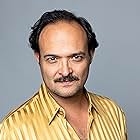

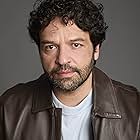

Netflix, 20 January 2026. Soundtrack: Composer - Victor Hernandez Stumpfhauser. Trivia References:
Almost Cops (Original Title: Bad Boa's). 2025 (Netherlands), Starring


Netflix, 20 January 2026. Soundtrack: Composer - Michiel Marsman.
Train Dreams. 2025, Starring
- Joel Edgerton as Robert Grainier
- Felicity Jones as Gladys Olding Grainier, Robert's wife
- Kerry Condon as Claire Thompson, a forestry services worker
- William H. Macy as Arn Peeples, an explosives expert
- Will Patton as the narrator[a]
- Nathaniel Arcand as Ignatius Jack, a storekeeper and Robert's friend
- John Diehl as Billy, an old logger
- Paul Schneider as Apostle Frank, a talkative logger
- Clifton Collins Jr. as Boomer, an injured man whom Robert encountered as a boy
- Alfred Hsing as Fu Sheng, a Chinese logger
- Chuck Tucker as Silent Man
- Rob Price as Curious Logger
- Beau Charles as Young Logger
- Johnny Arnoux as Kootenai Indian
- John Patrick Lowrie as Mr. Sears
Netflix, 21 January 2026. Soundtrack: "
Anachronisms:
The paper currency shown when Roberts brings home his wages does not match U.S. note designs in circulation during the 1910s. The bills appear to be modern-era prop money rather than period-accurate currency.
Towards the end of the film when Robert is walking the streets of Spokane, in the background of a shot The Washington Trust Financial Center is seen. The building was finished in 1973, a decade after the scene took place.
The chainsaw Roberts attempts to use has a design consistent with mid-20th-century portable chainsaws. These models were not introduced until several decades after the period in which the story is set.
Exterritorial. 2025 (German), Starring
- Jeanne Goursaud as Sara Wulf, a former Special Forces soldier struggling from PTSD[2]
- Dougray Scott as Erik Kynch, a consulate security officer[3]
- Lera Abova as Irina, a refugee hiding at the consulate, whose real name is Kira Volkova[4]
- Kayode Akinyemi as Sergeant Donovan
- Annabelle Mandeng as Deborah Allen
- Lara Babalola as a service manager information desk
- Godfrey Egbon as Evan
- Kris Saddler as Justin Martello
- Rada Rae as Aileen Kynch, Erik's daughter
- Rickson Guy da Silva as Joshua "Josh" Wulf, Sara's son
- Susanne Michel as Anja Wulf, Sara's mother
- Samuel Tehrani as the Taliban Leader
Netflix, 22 January 2026. Soundtrack: "
Anachronisms:
The Gunny is wearing several ribbons which were (in the time line of the movie) would make him over 70-years old - the Vietnam Service Medal, the Vietnam Gallantry Cross Unit Citation, and the Republic of Vietnam Campaign Medal.
Gunnery Sergeant Donovan is wearing the Vietnam Service Medal, Vietnam Gallantry Cross Unit Citation, and the Republic of Vietnam Campaign Medal. These medals were not awarded after 1973. The wardrobe department should have used Afghanistan and/or Iraq Era Campaign Medals to match the time line of the movie.
Jay Kelly. 2025, Starring
- George Clooney as Jay Kelly, a famous actor[4]
- Charlie Rowe as Young Jay Kelly
- Adam Sandler as Ron Sukenick, Jay's manager
- Laura Dern as Liz, Jay's publicist
- Billy Crudup as Timothy Galligan, Jay's acting school buddy who never got his big break[5]
- Louis Partridge as Young Timothy
- Riley Keough as Jessica Kelly, Jay's elder daughter[5]
- Grace Edwards as Daisy Kelly, Jay's younger daughter[5]
- Stacy Keach as Mr. Kelly, Jay's father[5]
- Jim Broadbent as Peter Schneider, a recently deceased director who gave Jay his big break[5]
- Patrick Wilson as Ben Alcock, another actor managed by Ron
- Eve Hewson as Daphne Spender, Jay's co-star in one of his earlier films, with whom he had an affair
- Greta Gerwig as Lois Sukenick, Ron's wife[5]
- Alba Rohrwacher as Alba, a film festival assistant serving as Jay's guide in Tuscany
- Josh Hamilton as Carter, Jessica's therapist
- Lenny Henry as Larry, Jay's acting coach from his youth
- Emily Mortimer as Candy, Jay's hairstylist
- Nicôle Lecky as Krista, Liz's assistant
- Thaddea Graham as Meg, Jay's assistant
- Sadie Sandler as Vivienne Sukenick, Ron's daughter
- Isla Fisher as Melanie Alcock, Ben Alcock's wife
- Jamie Demetriou as Clive, a passenger on the train from France to Italy that Jay befriends
- Patsy Ferran as Brenda, Clive's girlfriend
- Parker Sawyers as Props
- Lars Eidinger as German Cyclist
- Giovanni Zeqireya as Silvano, Jay's bodyguard
- Kyle Soller as the director of the film Jay completes prior to his Europe trip
- Tom Francis as Actor at Audition
- Giovanni Esposito as Antonio, one of Jay's father's Italian friends
Additionally, Baumbach and cinematographer Linus Sandgren make cameos as the director and camera operator, respectively, on one of Jay's past films.
Netflix, 23 January 2026. Soundtrack: "
Anachronism:
The train the characters travel on from Paris to Italy is an Italian ETR 300 model from the 1950s. Only three units were built and they were retired from service in 1988.
Straw. 2025, Starring
- Taraji P. Henson as Janiyah Wiltkinson
- Sherri Shepherd as Nicole
- Teyana Taylor as Det. Kay Raymond
- Sinbad as Benny
- Rockmond Dunbar as Chief Wilson
- Ashley Versher as Tessa George
- Mike Merrill as Det. Grimes
- Glynn Turman as Richard
- Anthony E. Williams as Officer Dickson
- Tilky Jones as Officer Oliver
- Gabby Jackson as Aria
Netflix, 24 January 2026. Soundtrack: "
Ballad Of A Small Player. 2025 (British), Starring
- Colin Farrell as Brendan Reilly / "Lord Doyle"
- Fala Chen as Dao-Ming
- Tilda Swinton as Cynthia Blithe
- Deanie Ip as "Grandma"
- Alex Jennings as Adrian Lippett
- Jason Tobin as Mr. Huang
Additionally, Anthony Wong makes a cameo appearance as an executive of the Macanese casino.
Netflix, 26 January 2026. Soundtrack: "
Anachronism:
The camera used by Blithe to photograph Lord Doyle at the card table is a Fujifilm XF1 with a red faux-leather covering. The XF1 was introduced in 2012, 13 years before the film's 2025 setting.
The Thursday Murder Club. 2025 (British), Starring
- Helen Mirren as Elizabeth Best, a retired MI6 officer
- Pierce Brosnan as Ron Ritchie, a retired twice-divorced union leader
- Ben Kingsley as Professor Ibrahim Arif, a retired psychiatrist
- Celia Imrie as Joyce Meadowcroft, a retired trauma nurse
- Naomi Ackie as Donna De Freitas, a local police constable
- Daniel Mays as DCI Chris Hudson, the senior investigating officer and De Freitas's superior
- Henry Lloyd-Hughes as Bogdan, a Polish handyman employed at Cooper’s Chase
- Tom Ellis as Jason Ritchie, Ron's famous ex-boxer son
- David Tennant as Ian Ventham, an ambitious businessman and co-owner of Cooper’s Chase
- Jonathan Pryce as Stephen Best, Elizabeth's chess-playing husband
- Paul Freeman as John Gray, a retired vet and husband of dying Thursday Murder Club member Penny
- Geoff Bell as Tony Curran, Ian's business partner
- Ingrid Oliver as Joanna Meadowcroft, Joyce's hedge fund manager daughter
- Joseph Marcell as Father Mackie, a Catholic priest
- Ruth Sheen as Maud, Tony's aunt
- Richard E. Grant as Bobby Tanner, a criminal and, under the alias "Derek Ward", a florist
- Susan Kirkby as Penny Gray, former detective who is now dying
- Will Stevens as Peter Mercer, Angela's boyfriend
Netflix, 28 January 2026. Soundtrack: "
Anachronisms:
At 18m 30s (or thereabouts), a Cooper's Chase employee is clamping Donna's police car. A) private clamping of vehicles was outlawed in UK in 2012. B) emergency services vehicles, such as marked police cars, are exempt from clamping in Britain.
The1973 newspaper on the murder board in the second scene states "Woman Killed in Home Invasion." As pointed out in another comment, this was not an expression any British newspaper would use in 1973 and wasn't even popularised in the US until the early 90s. Even in 2025, the phrase means something entirely different in UK (it's also known here as "Cuckooing")
The newspaper report shown early in the film refers to a "home invasion", a term that was unknown in the UK in the 1970s and only gained popularity in the US much later.
Opening scene: There is nowhere in the Brick Lane area (section) of London that could have looked like that in 1973.
The Big Fake (Il falsario). 2026 (Italian), Starring


Netflix, 29 January 2026. Soundtrack: Composer - Santi Pulvirenti. Filming Locations: Rome and Lazio, Italy.
A Time For Bravery (La hora de los valientes). 2025 (Mexican), Starring





Netflix, 31 January 2026. Soundtrack: Composer - Sergei Grosny.
Champions. 2023, Starring
- Woody Harrelson as Marcus Marakovich, a disgraced J-League basketball coach.
- Kaitlin Olson as Alex, Johnny's sister and Marcus's love interest[5]
- Matt Cook as Sonny, an assistant coach[5]
- Ernie Hudson as Phil Perretti, a fellow coach and Marcus' friend[5]
- Cheech Marin as Julio, the manager of the rec center where the Friends practice.[5]
- Mike Smith as Attorney McGurk
- Scott Van Pelt as himself
- Jalen Rose as himself
- Seán Cullen as Frank
Netflix, 31 January 2026. Soundtrack: "

No comments:
Post a Comment